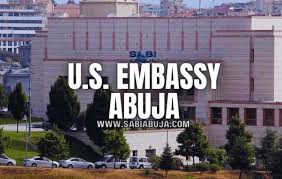
The United States Embassy in Abuja and the Consulate General in Lagos will be closed on Friday, July 4, 2025, in observance of U.S. Independence Day.
The announcement was made by the U.S. Mission in Nigeria via its official X (formerly Twitter) account on Thursday. The closure marks the annual celebration of the United States’ declaration of independence from British rule in 1776—a historic day commemorated across the U.S. with parades, concerts, barbecues, and fireworks.
“The U.S. Embassy in Abuja and Consulate General in Lagos will be closed on Friday, July 4, 2025, in observance of the U.S. Independence Day,” the U.S. Mission posted.
While the statement did not clarify the status of consular services, such as visa applications and passport processing, closures on national holidays typically affect all non-emergency operations. Normal services are expected to resume on Monday, July 7, 2025.
The U.S. Mission in Nigeria—comprising the embassy in the capital city, Abuja, and the consulate in Lagos—plays a key role in strengthening U.S.-Nigeria diplomatic, economic, and cultural relations.
Since Nigeria’s capital moved from Lagos to Abuja in 1991, the U.S. Embassy in Abuja has served as the primary hub for diplomatic engagements, security cooperation, and developmental initiatives with the Nigerian government. Meanwhile, the Consulate General in Lagos remains pivotal for economic relations, visa processing, and services for American citizens, reflecting the city’s status as Nigeria’s commercial powerhouse.
Independence Day closures are standard across U.S. diplomatic missions worldwide and reflect the nation’s enduring commitment to democratic values and individual liberties. In past years, the U.S. Embassy in Nigeria has used the occasion to host cultural events and receptions, often attended by Nigerian government officials, business leaders, civil society representatives, and members of the diplomatic community.
Beyond ceremonial observances, the United States and Nigeria share a strong bilateral relationship. The U.S. remains one of Nigeria’s largest trade and development partners, with cooperation spanning health, education, governance, and security. Programs such as the President’s Emergency Plan for AIDS Relief (PEPFAR), security assistance to combat insurgency in the northeast, and educational exchanges like the Fulbright Program are examples of ongoing U.S. support in Nigeria.
Additionally, U.S. agencies such as the International Development Finance Corporation (DFC) have invested in Nigerian infrastructure and private sector development, further cementing economic ties.

Leave a Reply