
Effective leadership is one of the most crucial elements in enabling an organization to sustain its operations, especially amidst the challenges brought about by rapid economic growth and global competition. Leaders are responsible for guiding and managing organizational operations. Strong leaders set clear, optimistic goals and objectives and steer the organization toward those goals using effective strategies. Additionally, they inspire and motivate employees by fostering a positive organizational culture and offering generous employee benefits such as health insurance, workers’ compensation, leave entitlements, and more.
In the era of globalization, many organizations face unprecedented challenges. To remain competitive and adapt to ever-evolving environments, internal changes in management and operations are essential. A well-planned change management strategy is crucial for implementing change organization-wide. While change management has long been recognized in the private sector, it is now gaining traction in the public sector as a driver of improved performance. The leadership style adopted in an organization significantly impacts its overall success.
Effective leadership sets the standard for behavior, communication, and decision-making, shaping the organizational climate. A strong leader, who reflects the organization’s values and vision, can inspire employees to work toward common goals, thereby fostering unity and commitment. Leadership goes far beyond strategic planning and financial oversight—leaders play a key role in cultivating and maintaining organizational culture. This responsibility lies at the heart of executive leadership, not just human resources. Leaders influence culture through their actions, words, and decisions.
Leadership is the power to influence and guide the values, beliefs, and behaviors of others. A person with strong leadership skills serves as a role model to employees. By demonstrating competence and achieving results, such leaders earn trust and admiration, naturally shaping the attitudes and values of their teams. Leaders who possess strong leadership abilities inspire others to work toward shared organizational objectives. A key trait of effective leadership is providing clear direction and encouraging employee commitment and collaboration to achieve common goals.
What is Leadership?
Leadership is the ability of an individual or a group to influence and guide followers or members of an organization, team, or society. While leadership is often associated with seniority, rank, or title, it is ultimately a skill that anyone can develop, regardless of their position.
Leaders are essential in all areas of society—business, politics, religion, social initiatives, and communities. They are expected to make sound, and sometimes difficult, decisions. A good leader articulates a clear vision, sets achievable goals, and equips their followers with the tools and knowledge needed to succeed.
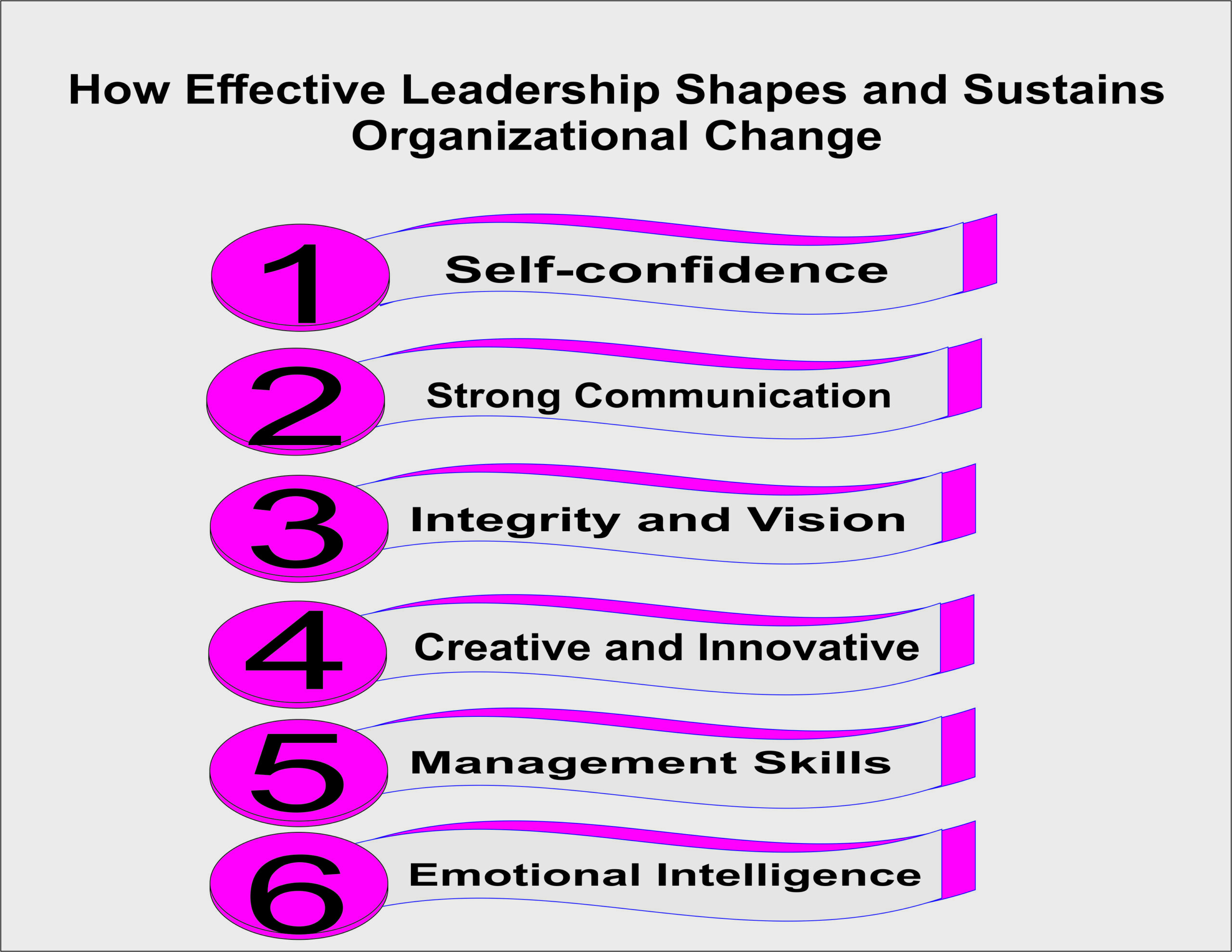
Effective leaders typically possess the following traits:
- Self-confidence
- Strong communication and management skills
- Creative and innovative thinking
- Perseverance
- Willingness to take risks
- Openness to change
- Emotional intelligence
- Calmness under pressure
A good leader exhibits the following qualities:
- Integrity
- Vision
- Communication
- Empathy
- Adaptability
- Honesty
- Patience
- Resilience
- Emotional intelligence
- Collaboration
- Passion
- Fairness
- Cultural awareness
- Intelligence and expertise
- Strategic and visionary decision-making
- Ability to persuade, motivate, empower, and inspire
These qualities help leaders build trust, energize teams, and navigate complex challenges effectively.
The Role of Leadership in Organizational Change
Leadership plays a vital role during organizational change, which can have either a positive or negative impact depending on the leaders involved. Because leaders greatly influence those they manage, gaining their support is essential for successful change implementation.
Change often disrupts established processes and may require employees to adopt new methods, shift departments, or part ways with colleagues. Strategic leadership and best practices in change management are critical to easing these transitions, addressing employee concerns, and fostering acceptance.
Not all leaders possess the same level of expertise in change management, which is why leadership coaching is an important component of change initiatives. It ensures that less experienced leaders receive the support they need while experienced leaders are kept aligned and engaged.
The Relationship between Leadership and Change Management
Organizational change is a challenging endeavor that requires alignment with an organization’s culture, values, people, and behaviors to produce the desired results. Human-centered leadership is essential for the success of such transformation efforts.
Change often triggers resistance due to psychological fears, social discomfort, or a lack of technical knowledge. Leaders must be equipped with strategic change management skills to help guide teams through these challenges.
Effective leadership can reduce resistance to change. Management must acknowledge that change is inevitable and take responsibility for leading employees through it. Change-oriented leadership involves empathy, communication, and proactive problem-solving.
Globalization, technological advancement, knowledge management, and cross-boundary collaboration are key drivers of organizational change. Organizations need innovative and visionary leaders capable of making informed decisions in these complex environments.
An effective change leader should have a clear purpose and vision, the ability to manage people through adversity, and a commitment to taking accountability. When employees trust and believe in their leaders, they are more likely to embrace and contribute to change.
Thus, there is a strong relationship between leadership and change. Effective leadership not only minimizes resistance but also ensures the smooth execution of transformation efforts.
Conclusion
The role of effective leadership in shaping and sustaining organizational change cannot be overstated. It sets the tone for the organization’s culture, values, and behaviors. When strong leadership supports change, it can improve employee morale, increase engagement, and enhance overall performance.
Conversely, weak leadership can create a negative environment marked by conflict, distrust, and reduced productivity. Leadership acts as the bridge between the organization’s long-term vision and day-to-day operations, shaping a work environment that nurtures innovation and collaboration.
By demonstrating authenticity, empathy, and clarity of purpose, leaders foster a positive change environment that supports organizational success. Investing in leadership development and cultivating a strong leadership culture is essential for sustainable and thriving organizational change.

Leave a Reply